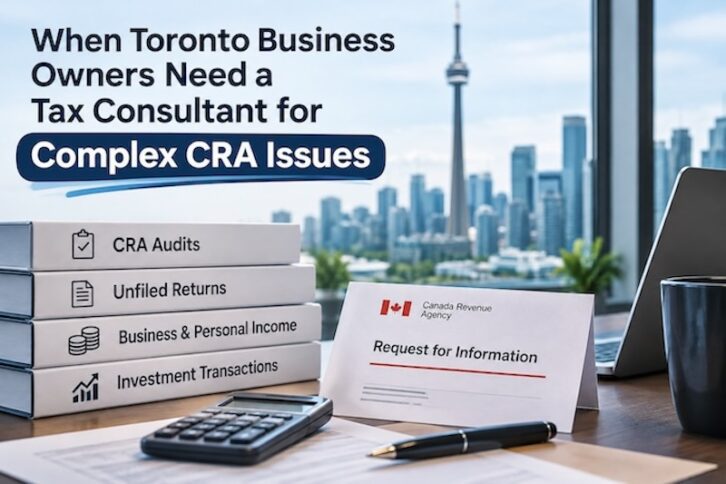
For a Toronto business owner, a tax concern can start with something small: a transaction that does not match the books, a return that was never completed or a CRA letter asking for information from an earlier year.
The difficulty often comes from how that issue connects to everything else. A question about business income may involve personal withdrawals. Missing returns may span several accounting systems. An investment account may contain transactions that were never included in the information given to the accountant.
At that point, the owner needs a clear understanding of what went wrong, which records are available and what steps can address the problem.
Recognise When the Work Has Changed
Routine accounting helps a business maintain its books, prepare returns and meet ongoing obligations. A historical tax problem can require a different kind of engagement.
The work may involve reconstructing earlier transactions, reviewing CRA correspondence, explaining discrepancies or assessing how to correct previous filings. It may also require someone to coordinate information across the owner’s personal and corporate tax affairs.
This does not automatically mean replacing the existing accountant. In some cases, the regular accountant supplies the records and background while a tax consultant handles the specific CRA matter.
The important question is whether the people involved have clearly defined responsibilities and relevant experience with the issue at hand.
Give CRA Correspondence a Clear Place in the Process
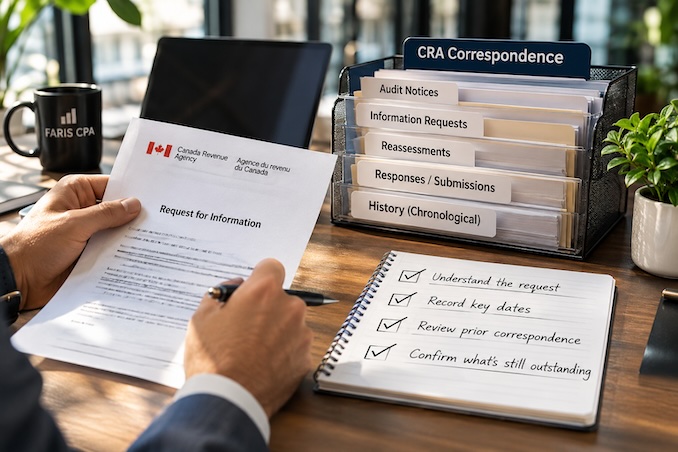
When a letter arrives, start by understanding what it says. A request for supporting information, an audit notice and a reassessment are different documents and may call for different responses.
Record any dates stated in the correspondence and gather earlier letters on the same matter. Reading the latest document in isolation can miss part of the history.
For example, a business owner may think the CRA is asking the same question again when the new request actually concerns an unresolved difference in the previous response. A chronological file helps the owner and adviser see what has already been supplied and what remains unanswered.
Avoid relying on a verbal summary when the original correspondence is available. The wording of the request matters.
Address Outstanding Returns and Reporting Errors
Unfiled returns can become harder to resolve as time passes. Records may sit with a former bookkeeper, access to an old platform may expire, or the owner may struggle to remember the purpose of a transfer.
A useful starting point is to establish which returns are outstanding and what information is needed for each period. Filing obligations and payment difficulties should both be discussed, rather than allowing uncertainty about one to delay work on the other.
Where earlier filings contain errors or omissions, an adviser can assess the appropriate correction route. The CRA’s Voluntary Disclosures Program provides relief on a case-by-case basis for qualifying disclosures. It can provide penalty and partial interest relief, but it does not eliminate the underlying taxes owed.
Eligibility and the relief available depend on the circumstances. Previous CRA contact is relevant, so the adviser needs to see that correspondence before recommending an approach.
Look Beyond a Single Set of Books
Business owners sometimes approach a consultant with a corporate tax concern and later discover that personal records are relevant too.
Money moving between a shareholder and a corporation needs a clear explanation. Investment activity, including cryptocurrency transactions, may require information from accounts that were never connected to the business’s accounting software.
A bank deposit alone may not explain the transaction that produced it. Exchange histories, contracts, statements and earlier filings can help establish the facts.
This is why the initial discussion should cover the full situation. An adviser working from incomplete information may be unable to identify how different reporting issues connect.
Choose Support That Matches the Problem
When considering professional help, describe the issue specifically. Explain whether it involves an audit, outstanding returns, a disputed assessment or income that may have been omitted.
Ask how the records will be reviewed, who will communicate with the CRA and what work is included in the engagement. A clear scope helps both parties understand the next steps and the information required.
The Toronto tax consultants at Faris CPA assist individuals and businesses with matters including CRA audits, voluntary disclosures, unfiled returns and disputed assessments. For an owner dealing with several connected concerns, the first discussion can help establish which issues need attention and what documentation is available.

Move From Uncertainty to a Defined Next Step
A tax problem rarely becomes easier through avoidance. It becomes more manageable when the owner knows what is outstanding, what the CRA is asking and who is responsible for responding.
That first step does not require having every document perfectly organised. It requires an honest account of the situation, the correspondence already received and a willingness to identify the gaps.
For Toronto business owners, seeking help at that stage can replace a vague concern with a practical plan for reviewing the records and addressing the matter.
