
Display Comb 4

/ featured media, post meta, title, read more link and full content

In the vibrant and diverse city of Toronto, where cultures converge and innovation thrives, the coffee scene has taken a modern approach in the form of automated coffee service. Amidst the bustling streets and hidden corners, coffee enthusiasts, especially those that commute by transit or travel by foot can quickly stop at the RC Coffee kiosk for a pick-me-up beverage that takes approximately two minutes to prepare by a singular robot barista arm, which you can watch through the window.

The menu specializes in a variety of hot and cold drinks, such as locally sourced coffee, espresso-based drinks (i.e., cappuccino, americano, latte, flat white, mocha), as well as matcha lattes, and hot chocolate. With a touch of a button, the drink can be customized without caffeine – decaf – or with alternative milk options – oat milk. Price points are on the affordable side, where drinks cost about $2-$4. Orders can be made on the touch screen at the kiosk or on the app, and payment by tap.

Operating 24/7, the coffee shops currently found in 10 locations around Toronto, including Toronto General Hospital, Kensington Market, Little Italy, St. Lawrence Market. Lyndhurst Centre, Dundas Station, Yonge Street, College Street, St. Joseph’s Hospital, Bickle Centre, and York University. Each location has its own unique artistic display. For example, the St Lawrence Market location is their most popular location, with a minimalistic line-art mural resembling a picturesque boutique café.
With its variety of options and strategically located outlets, RC Coffee has become a beloved destination for locals and visitors alike, offering an experience that goes beyond a simple cup of coffee.

Photos by Janey Tso

https://www.rccoffee.com/

Various locations in Toronto

Instagram:@rccoffeebarista

Facebook: /RCCoffeeBarista

Twitter: /rccoffeebarista

As mid-August rolls around, Canadians from all corners of the country eagerly anticipate one of the most iconic events of the season – the Canadian National Exhibition (CNE). The same traditions – entertainment, food, exhibits, and attractions – return with a few new added features to look forward to this year:

  • SuperWheel: North America’s tallest travelling ferris wheel – at over 150 feet- is new to the CNE. Each air-conditioned pod seats four to six people. There’s even a VIP black pod that also has a glass floor.
  • Drag Extravaganza: Drag Queen icons, Tynomi Banks, Mo Heart, Jan Sport, and Ivory Towers will take the stage with a fabulous performance at Bandshell Park on August 29th
  • Sparkling Symphony: Vegas-styled choreographed fountain show will be showcased daily at 1:30, 3:30, 5:30, and 8pm at Lake Ontario. Be sure to check out the show at night as well, where bedazzling lights and lasers will be sure to complement the soaring splashes of water.
  • Echoes of Entertainment, A Concert History of the CNE – a photographic tour of musical artists’ past performances at the CNE.
  • The Pink Floyd Exhibition: A pristine museum of artifacts and memorabilia from the band through 1976 to the 2000’s.
  • Monster Compound Experience: Skateboard performances and a barbershop will be sure to send the crowd roaring at Bandshell Park.
  • Ice Skating and Acrobatic Show called “Time Flies”:  Elvis Stojko, three-time World Champion will be returning to the Coca-Cola Coliseum for the ice-skating show daily at 2pm and 5pm for a show highlighting the last decade.
  • Pristine Seas: National Geographic exhibit on marine wildlife conservation.
  • Cirque-tacular Spectacular: Aerial acrobatics, trampoline and gymnastics show
  • Selfie Hallway: An over-sized CNE foods, an  ft shimmer wall, a giant floral aquarium to take selfies in.

Other amazing feats returning this year include the Drone Show presented by VinFast (nightly at 10:15pm), Celebrity Kitchen Stage, SuperDogs, and Gaming Garage sponsored by Intel,  There are also the Snowbirds to look forward to, as they will close out the event at the Canadian International Air Show during Labour Day Weekend.

As we know it,  CNE puts the “ex” in EXtra as this year’s round up of extravagant foods. From classic deep-fried goodness, to oversized foods, and barbie-pink coloured desserts, something is bound to tickle your fancy. Check out the photos below for the rest of our food highlights this year.

Established in 1879, this annual fair has become a cherished tradition that brings together people of all ages to celebrate the diversity, culture, and innovation that make Canada unique. The CNE 2023 promises to be an unforgettable experience, offering an eclectic mix of fun that showcase the best of Canadian creativity and spirit. CNE opens Friday August 18th, and will run until Monday September 4th!

Photos by Janey Tso

210 Princes’ Blvd
http://www.theex.com
Instagram: @letsgototheex
Twitter: @letsgototheex
Facebook: /TheEx

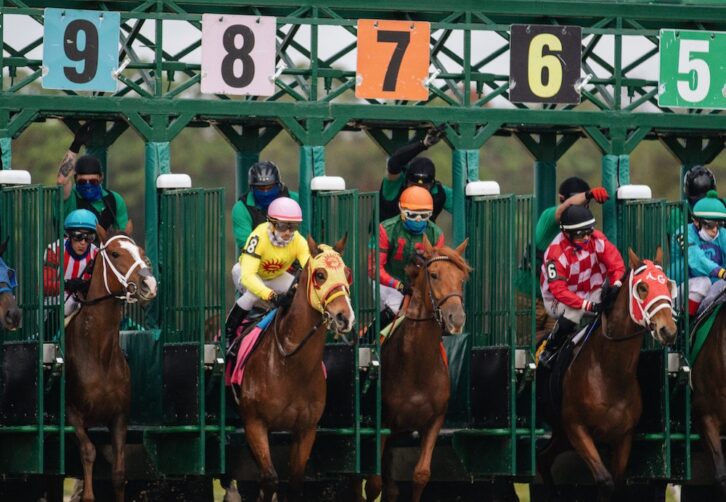
The Canadian Triple Crown of thoroughbred racing based in Canada is a series of three prestigious horse races for three-year-old Thoroughbred horses born in the country. The Canadian Triple Crown of Thoroughbred Racing is an illustrious title, coveted by horse racing enthusiasts and professionals alike. Like its more famous counterpart in the United States, Canada’s Triple Crown signifies excellence and dominance in the world of thoroughbred racing. Here’s a look at the history and significance of this prestigious title. It is one of North America’s most existing horse racing events. You may ask, how it began, what are its origins?

How it all started

The original idea of a Triple Crown in horse racing was first executed back in England where later was adopted in the U.S. and Canada. However, the Canadian Triple Crown is the oldest continuously run race in North America.

In England, where the original Triple Crown consists of the 2000 Guineas Stakes, the Epsom Derby, and the St. Leger Stakes. The idea eventually crossed the Atlantic to North America, where the U.S. established its version, consisting of the Kentucky Derby, the Preakness Stakes, and the Belmont Stakes. This was followed by Canada Inspired by these established series, Canada introduced its own Triple Crown in 1959.

Canadian Triple Crown of Thoroughbred Racing

Canada’s Triple Crown consists of three major races, each held in the province of Ontario.

The Queen’s Plate

The Queen’s Plate is the oldest of the three races. The first race was held back in 1860. Not only that, but It is also the oldest continuously run race in North America. The race is staged at Woodbine Racetrack in Toronto, and it covers 1 1/4 miles and is open to three-year-old thoroughbreds foaled in Canada. Over the years, the Queen’s Plate has seen many of the nation’s finest horses compete, establishing it as a focal event in Canadian sports.

The Prince of Wales Stakes

Held at Fort Erie Race Track, this race was first run in 1929, though it didn’t become a part of the Triple Crown series until 1959. Covering 1 3/16 miles, the Prince of Wales Stakes offers a different challenge for horses, especially with its unique track configuration and tighter turns.

The Breeders’ Stakes

This race is unique because it’s contested on turf, covering a distance of 1 1/2 miles at the Woodbine Racetrack. It began in 1889 and, like the Prince of Wales Stakes, was included in the Triple Crown series in 1959. Being the only turf race in the series, the Breeders’ Stakes often brings a different set of contenders and strategies to the fore.

Notable Moments

Since its inception in 1959, only seven horses have managed to secure the Canadian Triple Crown. Those happened in 1959, 1963, 1989, 1990, 1991, 1993 and the last one was in 2003. The first was New Providence in 1959, making an immediate mark on the newly established series. The most recent was Wando in 2003.

One notable period was the 1990s, which witnessed two Triple Crown winners. This decade saw success with Peteski in 1993 and Dance Smartly in 1991. The 91’ was a special year, because Dance Smartly was the first ever filly to win the Canadian Triple Crown. The last event was held in 2022, where the three winners were Moira, Duke of Love and Sir for Sure. The closest one of triple victories was in 2019, where even the most prestigious horsing gambling sites gave Tone Broke the biggest chances, but it failed in the 1st race, while claiming the other two.

Conclusion

The Canadian Triple Crown of Thoroughbred Racing is not only a testament to the rich equestrian heritage of the nation, but a heritage. It is a tradition, where the Canadian public can not only witness the prowess and skill of the horses but also the dedication and passion of the whole training team. Without a doubt, winning three diverse races in just a couple of days is monumental, making the Triple Crown a hallmark of excellence in Canadian thoroughbred racing.


We were lucky to be invited to get a taste of the new Ultra Supper Club to indulge in Pan-Asian flavours by Executive Chef Kihyun Kim. Knowing that it’s from INK events and Charles Khabouth, you can expect quality and attention to detail will be delivered. And what a special sensory experience it was!
Continue reading→

Many laws have been put into place throughout Canada’s history, ensuring that citizens behave in a moral manner that’s beneficial to the entire country.

However, some of these laws were implemented for particular reasons and never removed, no longer making sense in the modern era.

Others were weirdly specific from the moment of implementation.

Whether you’re travelling to Canada and what to know what not to do, or if you’re just interested in some quirky trivia about the world’s second-largest country, here are some whacky but fascinating laws in Canada!

No painting your garage door purple in Kanata

In the Ottowa suburb of Kanata (which used to be part of Ontario before it merged with the capital), the council wanted to maintain a certain aesthetic on the streets.

And apparently, they had a vendetta against the colour purple – as they prohibited any residents from painting their garage door in this hue.

Any other colour was fine!

It was illegal to whistle in an Ontario town

In the Ontario town of Petrolia, which is around 280km from Toronto, it was illegal to whistle or sing.

This was put into effect in 1990, when a law stating “Yelling, shouting, hooting, whistling or singing is prohibited at all times,” was written.

Apparently, before then, the town was too noisy and it was an attempt at calming it down!

The rule was enforced initially, but it was actually repealed in 2009. Nowadays, you can whistle to your heart’s content!

Scaring the monarch is a big no-no

The British King remains the head of state in Canada (and in 14 other territories around the world); the intrinsic ties between Canada and Britain mean that they have some similar laws.

One of these is that it’s illegal to scare the King, which is seen as an act of treason (which is still very much a criminal offence in Commonwealth countries and others around the world!).

In fact, this rule was made official in Britain’s Treason Act of 1842 in response to when a man drew a gun on Queen Victoria and applies to all Commonwealth nations.

It’s unlikely that many people, in Canada, Britain or anywhere else in the world, will speak to the monarch in their lifetime – but just so you know, if you do, don’t give them a scare!

You can’t buy crime comics

Crime comics were made illegal in Canada in the 1940s.

This basically refers to any comic that depicts criminal activity in any form – and yes, that means that most of Superman, Batman and Wonderwoman’s adventures are technically illegal!

Much like the regulation of video games all over the world, this was put into place due to children reading them and authorities thinking they were more likely to make them commit crimes.

Many have argued that this law is outdated, as while crime comics used to be quite gory, nowadays they’re based more on fantasy.

The card game “three card monte” is illegal

The gambling regulations in Canada are – in a word – complicated.

They’re different throughout the country, with government-run online gambling platforms in some provinces, and an iGaming market in Ontario.

But one gambling-related rule the whole country seems to have in common is the legality of three-card monte.

You’ll have seen variations of three-card monte in TV shows and films. The player is encouraged to leave a sum of money and then are shown three cards, one of which is the “money card”. The cards are then laid, face down, on a table and moved around, and the player guesses which one the “money card” is.

With sleight of hand and other manipulation tricks, it’s basically always made impossible for the player to pick the “money card”.

Many look at this like a gambling game, but in fact, it’s a scam – and the entire of Canada has banned it. Playing it on the street can result in up to two years of jail time!

Duelling is prohibited

You can’t challenge anyone to a duel in Canada!

Back in the day, duelling was a common way to resolve disputes. Whoever won would win the dispute; but obviously, it could end badly for the losing party.

It was very rare for someone to turn down a duel that they had been challenged to, for fear of losing honour.

Duelling was criminalised in 1844 for men in the army and the Queen’s servicemen, but it was implemented into civilian law shortly after.

Nowadays, it still remains illegal; although even if it wasn’t, surely times have changed enough that most people would nowadays say no to a duel if challenged!

Conclusion

Like many countries around the world, Canada’s home to some quirky laws that never got changed, and others that are very niched on particular aspects of life and culture. Some of these are forgotten about by the authorities, whereas others still impact Canadian society, but do remember them if you visit the country or for your next pub quiz!


1 19 20 21 22 23 312